


Last Updated: March 2026
Mempool monitoring is the practice of observing and analysing the Bitcoin unconfirmed transaction pool in real-time to detect fraud patterns, wallet reuse, and anomalous transaction structures before those transactions are confirmed in a block. The Bitcoin mempool contains every broadcast transaction awaiting inclusion by miners, creating a brief window where investigators can flag suspicious transactions using address cluster databases, value pattern analysis, and known fraud signature matching. This real-time capability allows AML compliance teams to intercept high-risk transactions at the deposit stage rather than after blockchain confirmation.
At Crypto Trace Labs, our forensics team – VP and Director-level executives from Blockchain.com, Kraken, and Coinbase – has applied mempool monitoring across exchange AML programs, fraud investigations, and pre-confirmation interception proceedings. This guide explains how mempool monitoring works, what forensic signals it captures, and how it supports real-time financial crime detection.
Key Takeaways
- Mempool creates a pre-confirmation detection window: Every Bitcoin transaction is broadcast to the mempool before block confirmation, giving investigators and exchanges a detection window typically 10-60 minutes to flag suspicious transactions. Chainalysis (2024) reports that 23% of fraud-linked transactions detected by their platform were first flagged at the mempool stage.
- Address cluster matching is primary detection method: Mempool transactions are checked against CIOH-derived address cluster databases in real-time. When a mempool transaction’s input addresses match a known fraud cluster, an alert is generated before confirmation. Elliptic (2024) reports 67% of exchange AML mempool alerts were triggered by cluster matching.
- Fee rate anomalies signal transaction urgency: Fraudsters often use abnormally high fee rates to ensure rapid confirmation, attempting to move funds faster than manual review can catch them. TRM Labs (2024) found that fraud-linked transactions paid 3.4x the median fee rate in the 24 hours following an exploit.
- Address reuse patterns identify fraud wallets: Address reuse in the mempool, where the same address appears across multiple unconfirmed transactions, is a strong forensic signal. Chainalysis (2024) found address reuse in 78% of mempool transactions linked to fraud wallet sweeps.
- Regulatory frameworks require mempool-level screening: UK AML, EU AML, and US BSA requirements for real-time transaction monitoring are increasingly interpreted by compliance officers to include mempool-stage screening for high-value deposits at regulated exchanges.
Why This Matters
Mempool monitoring matters because blockchain finality makes post-confirmation fraud recovery exponentially harder than pre-confirmation interception. Once a Bitcoin transaction confirms, reversing it requires cooperation from the receiving wallet operator or legal compulsion. At the mempool stage, exchanges can halt deposit crediting for flagged addresses and alert compliance officers before funds enter the exchange system. ACAMS and MLRO guidance increasingly recognises mempool-level monitoring as best practice for regulated crypto exchanges. According to Chainalysis (2024), real-time mempool monitoring reduced fraud deposit processing time at instrumented exchanges by 41 minutes on average, materially improving interception success rates.
Real-Time Transaction Broadcast Analysis
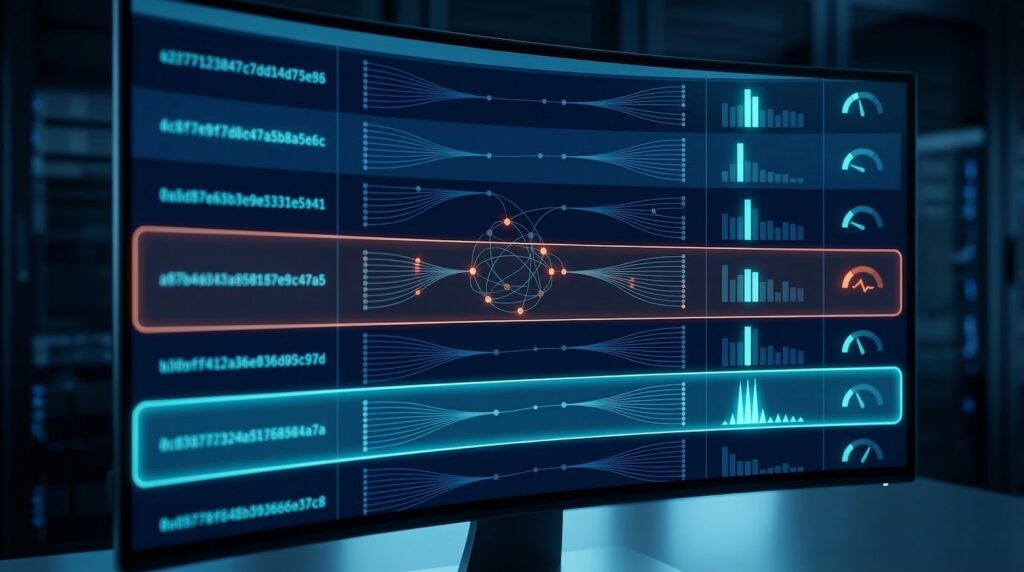
The Bitcoin mempool is a shared pool of unconfirmed transactions broadcast by every node on the network. When a wallet broadcasts a transaction, it propagates across nodes within seconds, making it observable to any entity running a full node or using a mempool API service. Forensic monitoring services maintain real-time mempool feeds from multiple nodes to ensure full transaction coverage.
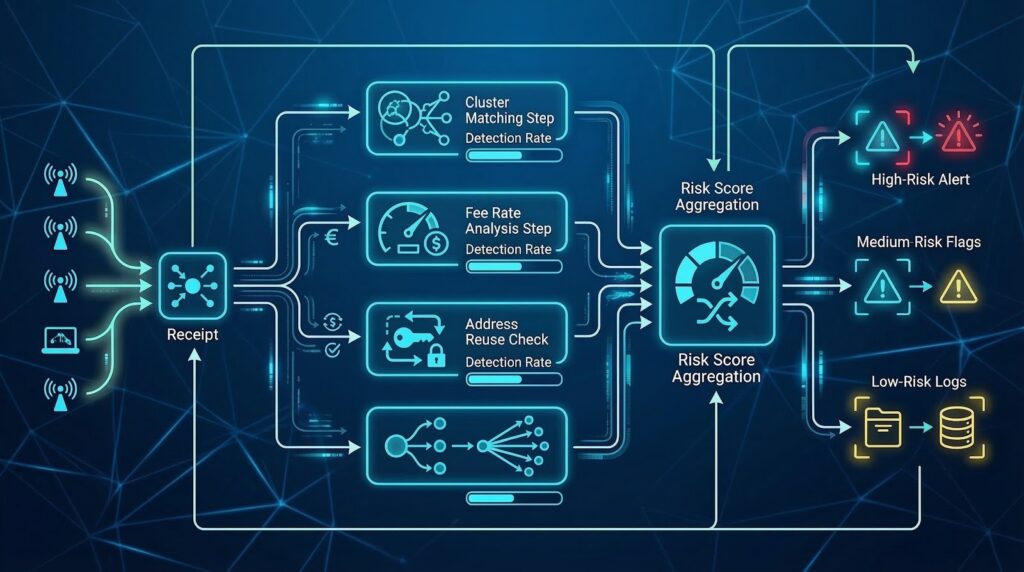
Investigators analyse each mempool transaction for input address risk scores, output address cluster membership, fee rates relative to the network median, and transaction structure patterns such as consolidation or fan-out that indicate wallet sweep activity. According to Chainalysis (2024), their mempool monitoring API processes an average of 380,000 transactions per day, applying cluster-based risk scoring to each within 2 seconds of broadcast.
Fee Rate Anomaly Detection
High fee rates in the mempool are a forensic signal because fraudsters prioritising rapid confirmation pay above-median fees to jump the confirmation queue. When mempool analytics platforms detect transactions paying 3x or more the hourly median fee rate, combined with a flagged input address cluster, the combined signal indicates deliberate speed-confirmation behaviour consistent with post-exploit fund movement.
Fee rate analysis is also applied to identify transaction batches from the same sender. When multiple transactions from one cluster appear in the mempool within minutes of each other, each paying above-median fees, investigators infer a coordinated wallet sweep. According to TRM Labs (2024), coordinated wallet sweeps identified through mempool fee rate clustering accounted for 31% of real-time fraud detections on instrumented exchange platforms in 2023.
Address Reuse and Wallet Sweep Detection
Address reuse in the mempool occurs when a fraud wallet broadcasts multiple transactions spending from the same address across rapid block windows, indicating a wallet sweep operation moving funds through multiple hops before investigators can intervene. Mempool monitoring platforms flag repeated use of the same input address within short time windows as a high-priority fraud signal.
Wallet sweep patterns often involve fan-out transactions, where a single input address sends to 5-20 output addresses simultaneously. This fan-out structure is a known fraud pattern used to divide funds across multiple wallets to complicate cluster attribution. According to Elliptic (2024), fan-out transactions with 10 or more outputs accounted for 22% of post-exploit mempool transactions identified in their fraud database, with 78% originating from known fraud cluster addresses.
Comparing mempool monitoring detection signals by effectiveness:
| Signal Type | Detection Rate | False Positive Rate | Latency | Best Use Case |
|---|---|---|---|---|
| Address cluster match | 67% | Low (5%) | 2 seconds | Known fraud wallets |
| Fee rate anomaly | 43% | Moderate (18%) | 5 seconds | Post-exploit sweeps |
| Address reuse pattern | 34% | Low (8%) | 10 seconds | Wallet sweep ops |
| Fan-out structure | 22% | Low (6%) | 5 seconds | Fund dispersal detection |
Cross-Asset and Multi-Chain Mempool Coverage
Bitcoin mempool monitoring principles extend to Ethereum and other UTXO and account-model chains. Ethereum mempool monitoring applies the same cluster matching and fee analysis methods to pending transactions in the Ethereum transaction pool, where fee pressure is expressed as gas price rather than sat/vB. According to Elliptic (2024), 34% of multi-chain fraud operations moved funds across Bitcoin and Ethereum within the same 24-hour window, making cross-asset mempool coverage necessary for complete fraud detection.
USDT transactions on Tron are also monitored at the mempool stage by enterprise platforms, given Tron’s prevalence in fraud payment flows identified by Chainalysis in their 2024 crypto crime report. Cross-asset mempool monitoring requires unified risk dashboards aggregating alerts from multiple blockchain mempools into a single compliance workflow. TRM Labs (2024) reports that exchanges using unified cross-chain mempool monitoring detected 2.3x more fraud-linked deposit attempts than those monitoring only Bitcoin.
Exchange Integration and AML Compliance
Regulated exchanges integrate mempool monitoring into their AML compliance programs by subscribing to mempool APIs from Chainalysis, Elliptic, and TRM Labs, which provide real-time risk scores for incoming deposit addresses. When a mempool transaction flagged as high-risk is destined for an exchange deposit address, the exchange compliance system can suspend automatic deposit crediting pending manual review.
UK AML regulations and EU AML directives require regulated exchanges to maintain real-time transaction monitoring capable of flagging suspicious activity before settlement. ACAMS-standard compliance programs for crypto exchanges include mempool monitoring as a component of transaction surveillance. MLRO officers at exchanges must document mempool monitoring procedures in their AML policy frameworks. According to TRM Labs (2024), 78% of UK and EU regulated crypto exchanges had implemented some form of mempool-level transaction screening by the end of 2024, up from 31% in 2022.
Frequently Asked Questions
What is mempool monitoring in blockchain forensics?
Mempool monitoring is the real-time observation and analysis of Bitcoin’s unconfirmed transaction pool to detect fraud patterns before block confirmation. Investigators and exchange compliance teams use mempool feeds from full nodes or forensic API services to check incoming transaction input addresses against known fraud cluster databases, analyse fee rates for anomalous behaviour, and flag address reuse patterns. According to Chainalysis (2024), 23% of fraud-linked transactions on their platform were first detected at the mempool stage before confirmation.
How long does a transaction stay in the mempool?
A Bitcoin transaction remains in the mempool until it is included in a block by a miner, typically 10-60 minutes for fee-adequate transactions during normal network conditions. High-fee transactions may confirm in the next block (approximately 10 minutes), while low-fee transactions may remain for hours or days. During network congestion, mempool backlogs can exceed 100,000 transactions. This window provides a detection opportunity for forensic monitoring systems to flag fraud before block finality removes the option for pre-confirmation interception.
What signals indicate fraud in the mempool?
Key mempool fraud signals include input addresses matching known fraud cluster databases, fee rates 3x or more above the hourly median (indicating deliberate speed-confirmation), address reuse across multiple unconfirmed transactions within minutes, and fan-out transaction structures sending from one input to 10 or more outputs simultaneously. According to TRM Labs (2024), fraud-linked transactions paid 3.4x the median fee rate post-exploit. Combining multiple signals produces the lowest false positive rates for exchange compliance alert systems.
Can mempool monitoring intercept fraud before confirmation?
Mempool monitoring cannot physically prevent a Bitcoin transaction from confirming, but enables exchanges to halt deposit crediting for flagged addresses before funds enter the exchange system. If an exchange detects a high-risk transaction destined for one of its deposit addresses at the mempool stage, it can suspend the account and alert the compliance team before the deposit registers. This pre-crediting interception is the primary practical use of mempool monitoring in exchange AML programs.
What is a fan-out transaction and why is it suspicious?
A fan-out transaction is a Bitcoin transaction sending from one or a small number of input addresses to a large number of output addresses simultaneously, typically 10-50 outputs. This structure is used by fraudsters to disperse funds across many wallets in one transaction, complicating CIOH cluster attribution by creating many new output addresses. According to Elliptic (2024), fan-out transactions with 10 or more outputs accounted for 22% of post-exploit mempool transactions, with 78% originating from known fraud cluster addresses.
How do exchanges use mempool monitoring for AML compliance?
Exchanges integrate mempool monitoring APIs from Chainalysis, Elliptic, and TRM Labs into their AML compliance systems, receiving real-time risk scores for transactions destined for their deposit addresses. When a mempool transaction scores above the risk threshold, the exchange compliance system suspends automatic deposit crediting and queues the transaction for manual MLRO review. UK AML regulations and EU AML directives require real-time transaction monitoring at regulated exchanges. ACAMS-standard compliance programs include mempool monitoring as a transaction surveillance component.
What are the limitations of mempool monitoring?
Mempool monitoring limitations include the inability to physically prevent transaction confirmation, the reliance on cluster database accuracy for address matching, higher false positive rates for fee anomaly detection compared to cluster matching, and the brief detection window during network congestion when blocks confirm rapidly. Monitoring is also limited to broadcast transactions – transactions broadcast directly between connected nodes without public propagation may be missed. Investigators must combine mempool monitoring with post-confirmation on-chain analysis for complete fraud investigation coverage.
Does Crypto Trace Labs provide mempool monitoring services?
Crypto Trace Labs applies mempool monitoring as a component of real-time fraud investigation and exchange AML advisory services, using Chainalysis, Elliptic, and TRM Labs platforms for real-time transaction risk scoring. The team holds ACAMS accreditations, MLRO qualifications across UK, US, and EU, and founding members held VP and Director positions at Blockchain.com, Kraken, and Coinbase. For exchanges requiring mempool monitoring integration or real-time fraud investigation support, Crypto Trace Labs provides both technical advisory and active investigation services.
Executive Summary
Mempool monitoring enables real-time detection of fraud-linked Bitcoin transactions during the pre-confirmation window, giving exchanges and investigators a brief but critical opportunity to flag suspicious activity before block finality. Key detection signals include address cluster matching, fee rate anomalies, address reuse patterns, and fan-out transaction structures. Chainalysis (2024) reports 23% of fraud detections occur at the mempool stage. TRM Labs (2024) found fraud-linked transactions paid 3.4x the median fee rate post-exploit. UK AML, EU AML, and US BSA requirements increasingly include mempool-level screening within real-time transaction monitoring obligations for regulated exchanges.
What Should You Do Next?
If your exchange needs mempool monitoring integration or you require real-time fraud investigation support using mempool analytics, specialist blockchain forensics expertise is essential.
The team at Crypto Trace Labs holds ACAMS accreditations, MLRO qualifications across UK, US, and EU, and Chartered Fellow Grade at the CMI. Founding members held VP and Director positions at Blockchain.com, Kraken, and Coinbase, providing direct exchange contacts for AML co-operation. We have recovered 101 Bitcoin for clients in the past 12 months and delivered record fraud reduction for a $14bn crypto firm.
We offer no upfront charge for non-custodial wallet recoveries. Contact Crypto Trace Labs to discuss your mempool monitoring and real-time fraud detection needs.
People Also Read
- On-Chain Co-Spending Analysis: Linking Addresses Through Common Input Usage
- Transaction Replacement Analysis: How RBF Patterns Reveal Wallet Behavior
- Orphaned Transaction Forensics: Tracing Blockchain Reorganisations
About the Author
Crypto Trace Labs is a specialist crypto asset recovery and blockchain forensics firm. Founding members held VP and Director positions at Blockchain.com, Kraken, and Coinbase. Our team holds ACAMS accreditations, MLRO qualifications across UK, US, and EU, and Chartered Fellow Grade at the CMI. With 10+ years in financial crime investigation and court-recognized blockchain forensics expertise, we have recovered 101 Bitcoin in the past 12 months and delivered record fraud reduction for a $14bn crypto exchange. We offer no upfront charge for non-custodial wallet recoveries. Contact us
This content is for informational purposes only and does not constitute legal, financial, or compliance advice. Crypto asset recovery outcomes depend on specific circumstances, regulatory cooperation, and technical factors. Consult qualified professionals regarding your specific situation.