


Last Updated: March 2026
On-chain evidence collection standards define the procedural and technical requirements that blockchain forensic data must satisfy before courts will admit it as evidence in civil or criminal proceedings. In the UK, courts applying Civil Procedure Rules (CPR) Part 35 and the Forensic Science Regulator’s codes of practice require that all digital evidence be collected in a manner that preserves integrity, documents provenance, and withstands cross-examination. A single procedural failure – collecting data without recording its source, failing to hash-verify downloaded records, or omitting timestamps – can render an otherwise sound blockchain trace inadmissible.
Crypto Trace Labs prepares court-compliant on-chain evidence packages for civil litigation, criminal referrals, and regulatory proceedings. Our team holds ACAMS (Association of Certified Anti-Money Laundering Specialists) accreditations, MLRO (Money Laundering Reporting Officer) qualifications across the UK, US, and EU, and Chartered Fellow Grade at the CMI, with founding members drawn from Blockchain.com, Kraken, and Coinbase at VP and Director level.
Key Takeaways
- Hash verification is non-negotiable: Every downloaded blockchain dataset must have an SHA-256 hash recorded at the moment of collection to prove data integrity in court.
- Source documentation is mandatory: Courts require records of exactly which blockchain node, API endpoint, or explorer was queried, and at what date and time.
- Chain of custody must be unbroken: Evidence passed between analysts, tools, or organisations must be logged at every transfer point to prevent admissibility challenges.
- Tool disclosure is required: According to Chainalysis’s 2024 compliance guidance, courts increasingly demand disclosure of which analytics tools were used and whether their methodology has been independently validated.
- Expert independence must be demonstrable: CPR Part 35 requires the expert’s overriding duty to be to the court, not the instructing party – evidence collection must reflect that independence.
Why This Matters
On-chain evidence collected without following accepted standards is routinely challenged and excluded in UK courts. Defendants instruct their own blockchain experts to attack collection methodology, and judges who are not technical specialists rely heavily on procedural compliance as a proxy for reliability. According to the Forensic Science Regulator’s 2024 Codes of Practice, digital evidence that cannot demonstrate integrity through hash verification and documented provenance must be treated as potentially unreliable. Firms that collect blockchain data informally – downloading CSV exports from block explorers without recording source URLs, timestamps, or hash values – produce evidence that opposing counsel can dismantle in minutes, destroying cases that may otherwise be legally sound.
Evidence Integrity Requirements Courts Apply
Evidence integrity in on-chain forensics refers to the demonstrated ability to prove that blockchain data has not been altered between collection and presentation in court.
The minimum integrity requirements applied by UK courts follow the ACPO (Association of Chief Police Officers) Good Practice Guide for Digital Evidence, adapted for blockchain environments. First, the original data source must be preserved. Second, no action taken by the forensic examiner should alter the data in any way. Third, an audit trail must document all processes applied to the evidence. Fourth, the person in charge of the investigation must ensure the law and these principles are adhered to throughout.
In practical terms, this means analysts must record the URL of every blockchain explorer or node API queried, the exact timestamp of each query, the full response received, and an SHA-256 hash of that response computed at the point of collection. Any post-processing – filtering transactions, converting currencies, clustering addresses – must be documented as a separate step that did not alter the underlying source data.
| Integrity Requirement | Acceptable Method | Non-Compliant Method |
|---|---|---|
| Source documentation | Full API URL + timestamp + response log | “Downloaded from block explorer” |
| Data integrity | SHA-256 hash at collection | No hash recorded |
| Processing transparency | Documented analysis steps separate from raw data | Merged raw and processed data |
| Tool disclosure | Named tool + version + methodology source | “Proprietary analysis” |
| Transfer log | Signed handover records between analysts | No transfer documentation |
Chain of Custody Documentation for Blockchain Evidence
Chain of custody in blockchain forensics tracks the movement of evidence from initial collection through to court presentation, ensuring it can be accounted for at every stage.
For on-chain evidence, the chain of custody log must record: who collected the data, from which source, using which tool or method, at what time; who the data was transferred to and when; what storage medium was used and how it was secured; and what transformations were applied at each analytical stage. Every person who handled the evidence must sign the log.
According to ACAMS’s 2024 Financial Crime Compliance guidance, digital evidence that cannot produce a complete chain of custody record is significantly more vulnerable to exclusion in proceedings where the opposing party is well-resourced. This is particularly relevant in crypto fraud litigation, where defendants frequently retain specialist blockchain experts to challenge collection methodology rather than disputing the underlying transaction facts.

Node and API Source Selection Standards
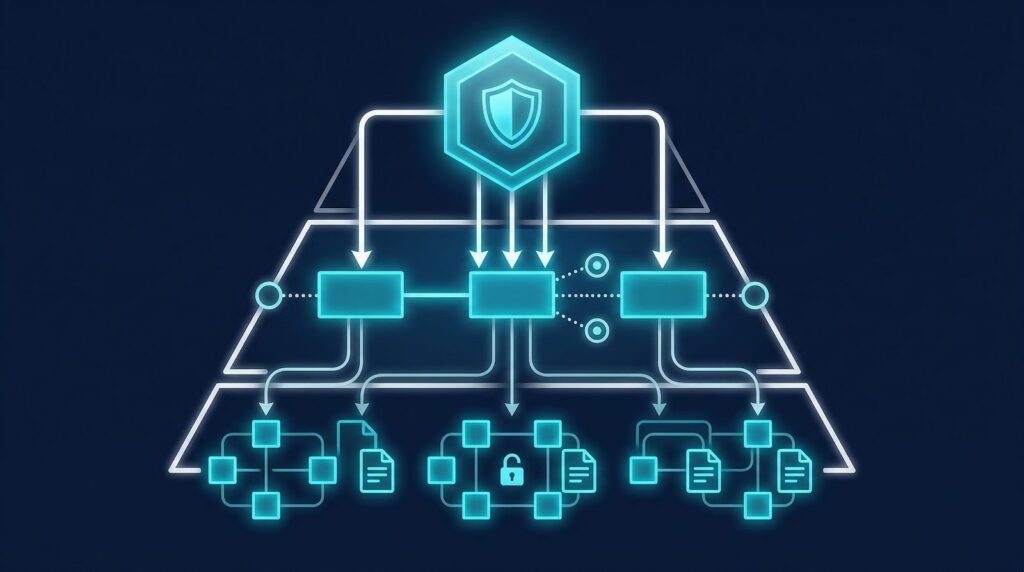
The choice of blockchain node or API source directly affects the evidential weight of the data collected, as courts assess whether the source is authoritative, independent, and reproducible.
First-party node queries – where the investigator runs or connects to a full blockchain node – produce the highest-quality evidence because the data comes directly from the blockchain without intermediation. This is the preferred standard for high-value litigation. For Bitcoin investigations, a full Bitcoin Core node query is preferable to a third-party API. For Ethereum, connection to a full archive node is preferred.
Where third-party APIs are used (Etherscan, Blockchair, Blockchain.com), the analyst must record the API’s terms of service, note that the API may apply its own data processing, and document any limitations acknowledged by the API provider. According to Elliptic’s 2024 forensic methodology documentation, courts are increasingly asking whether API-sourced data has been cross-verified against at least one independent source to establish consistency.
Timestamp and Metadata Preservation Standards
Timestamp accuracy is critical in on-chain evidence because transaction sequencing – the order in which transactions were included in blocks – is often central to establishing causation, tracing asset flows, and rebutting alibi claims.
Blockchain timestamps are recorded in Unix epoch format at the block level, not the transaction level. Individual transactions do not carry their own timestamps – they receive the timestamp of the block in which they were confirmed. Forensic analysts must document this distinction clearly, because opposing experts commonly argue that transaction timestamps are less precise than claimants assert.
For Ethereum, analysts must additionally document the difference between block timestamps (set by the miner or validator) and mempool submission times (when the transaction was first broadcast). In cases involving front-running, sandwich attacks (a form of transaction ordering manipulation), or time-sensitive smart contract interactions, mempool timestamp data from services such as BloXroute or MEV-Boost relays may be relevant and must be collected using the same integrity standards as on-chain data.
Admissibility Challenges and How to Prevent Them
Admissibility challenges in crypto litigation most commonly target four weaknesses in evidence collection: unverified data sources, undisclosed tools, gaps in chain of custody, and expert bias.
The most effective defence against data source challenges is collecting from multiple independent sources and documenting each separately. If Chainalysis Reactor and an independent Etherscan API query both show the same transaction data, opposing counsel cannot credibly argue the data was manipulated. The most effective defence against tool challenges is pre-emptive disclosure – naming the tool, its version, and its published methodology documentation in the report before the challenge arises.
Chain of custody gaps are typically caused by informal file transfers (emailing CSV exports, using consumer cloud storage) rather than formal evidence management systems. Using forensic evidence management software with audit logging – or at minimum, a signed transfer log – closes this gap. Expert bias is addressed through CPR Part 35 compliance: the expert declaration must confirm the duty to the court and disclose any relationship with the instructing party.
Frequently Asked Questions
What is the minimum standard for on-chain evidence collection in UK courts?
The minimum standard requires documentation of the data source (including full URL or node address), a timestamp at the moment of collection, an SHA-256 hash of the raw data to prove integrity, a complete chain of custody log, and disclosure of any tools or software used in analysis. Evidence that cannot satisfy these requirements is vulnerable to admissibility challenges under the Civil Evidence Act 1995 and the Forensic Science Regulator’s 2024 Codes of Practice.
Does blockchain evidence need to be collected by a qualified expert?
Yes for court proceedings. UK courts require that digital evidence submitted in support of legal applications be collected by someone with demonstrable competence in blockchain forensics and capable of complying with CPR Part 35. Evidence collected informally by non-experts – even if technically accurate – is routinely challenged on the basis of collection methodology and the collector’s qualifications, creating unnecessary vulnerability in what may otherwise be a strong case.
How is chain of custody maintained for blockchain evidence?
Chain of custody is maintained through a contemporaneous log recording every person who handled the evidence, when and why they handled it, what they did with it, and what they passed on. For blockchain evidence, this extends to recording transfers between software tools, exports to different formats, and any analysis steps that transformed the raw data. The log must be signed at each transfer point and retained as part of the forensic record.
Can evidence from block explorers be used in court?
Block explorer data can be used but carries lower evidential weight than node-queried data because block explorers apply their own data processing and may not be independently auditable. If block explorer data is used, the analyst must document the explorer’s data sources, record the exact URL and timestamp of each query, hash the page response or export, and note any known limitations. Cross-verification with a second independent source significantly strengthens the evidence.
What tools are accepted for blockchain evidence collection in UK proceedings?
Courts do not maintain an approved tool list. The key requirement is that whatever tool is used, its methodology is disclosed and the analyst can defend it under cross-examination. Commercial tools such as Chainalysis Reactor, Elliptic Lens, and TRM Labs are widely used and their methodologies are published. Open-source tools are acceptable if the analyst can demonstrate technical competence in their use and document the methodology applied.
How should cryptocurrency values be recorded in evidence?
Cryptocurrency values must be recorded in both the native denomination (BTC, ETH) and GBP at the exchange rate prevailing at the specific date and time of each transaction. The source of the exchange rate data must be documented – typically a regulated exchange API or a recognised market data provider such as CoinGecko or CoinMarketCap. Courts are alert to value inflation through use of peak-price exchange rates rather than contemporaneous rates.
What happens if on-chain evidence is collected improperly?
Improperly collected on-chain evidence is subject to an admissibility challenge, which may result in exclusion of the evidence entirely. If the excluded evidence is central to the case, this can lead to the claim failing or, in freezing injunction applications, the injunction being discharged. The instructing party may also face adverse costs if the court finds that the application was brought on the basis of evidence that should have been known to be inadequate.
How long does proper on-chain evidence collection take?
For straightforward transactions involving a small number of wallets and a single blockchain, initial collection of compliant evidence typically takes 2-4 hours. Complex cases – multi-hop traces across several blockchains, mixer usage, DeFi protocol interactions – can require several days of collection work. Emergency freezing injunction applications may require a preliminary evidence package within 24-48 hours, with a full collection package prepared for the return date.
Is evidence collected in other jurisdictions admissible in UK courts?
Evidence collected abroad is generally admissible in UK civil proceedings if it satisfies UK standards for reliability and integrity. The collecting analyst must still demonstrate compliance with equivalent integrity standards, and the evidence must be accompanied by a disclosure of the foreign jurisdiction’s relevant rules on evidence collection. For criminal proceedings, formal mutual legal assistance mechanisms may be required.
What records should be kept after a case concludes?
All on-chain evidence collection records should be retained for at least six years after the conclusion of proceedings, or longer if there is any prospect of appeal or related proceedings. This includes raw data files, hash records, source documentation, chain of custody logs, and all correspondence with clients and instructing solicitors relating to the evidence.
Executive Summary
On-chain evidence collection for court proceedings requires adherence to a set of standards that go well beyond simply downloading blockchain data. Courts in the UK require hash-verified data from documented sources, an unbroken chain of custody, full tool disclosure, and an expert willing to defend the collection methodology under cross-examination. Failures in any of these areas create admissibility vulnerabilities that opposing counsel will exploit. Firms instructed to support litigation, freezing applications, or regulatory referrals should ensure their forensic evidence is collected by ACAMS-accredited experts following CPR Part 35 obligations from the outset.
What Should You Do Next?
If you are preparing blockchain evidence for court proceedings, regulatory submissions, or law enforcement referrals, ensure it meets the standards required before it reaches a judge. Crypto Trace Labs collects, processes, and presents on-chain evidence to the standard required by UK courts, including CPR Part 35 compliant expert reports, hash-verified data packages, and full chain-of-custody documentation.
The team at Crypto Trace Labs – ACAMS-accredited, MLRO-qualified across UK, US, and EU, and Chartered Fellow Grade at the CMI, with founding members from Blockchain.com, Kraken, and Coinbase – has supported freezing injunction applications, civil fraud proceedings, and criminal referrals across multiple jurisdictions. We offer no upfront charge for non-custodial wallet recoveries. Contact us to discuss your evidence requirements in confidence.
People Also Read
- How Does Blockchain Forensics Work? Expert Methods Explained
- Definition of Digital Evidence: Complete Guide for 2026
- Crypto Freezing Injunctions: How Courts Protect Victims of Cryptocurrency Theft
- On-Chain Heuristics: How Pattern Recognition Identifies Wallet Owners
About the Author
Crypto Trace Labs is a specialist crypto asset recovery and blockchain forensics firm founded by VP and Director-level executives formerly of Blockchain.com, Kraken, and Coinbase. Our team holds ACAMS accreditations, MLRO qualifications across the UK, US, and EU, and Chartered Fellow Grade status at the CMI. With over 10 years of experience in financial crime investigation and court-recognized blockchain forensics expertise, we have recovered 101 Bitcoin for clients in the last 12 months and delivered record fraud reduction for a $14bn crypto exchange. We work with law enforcement agencies, regulated financial institutions, and private clients on crypto asset recovery, blockchain forensics, AML compliance, and expert witness testimony – globally. We offer no upfront charge for non-custodial wallet recoveries. Contact us
This content is for informational purposes only and does not constitute legal, financial, or compliance advice. Crypto asset recovery outcomes depend on specific circumstances, regulatory cooperation, and technical factors. Consult qualified professionals regarding your specific situation.