


Last Updated: March 2026
Lightning Network payment channel forensics is the structured analysis of on-chain Bitcoin data created when Lightning channels are opened and closed, combined with network-layer gossip data and (where available) node operator records, to reconstruct participation evidence, capacity, timing, and final balance distributions for channels that routed payments off-chain. Individual Lightning payments do not appear on the Bitcoin base layer, but every channel leaves two immutable on-chain anchor transactions that carry significant forensic data.
Crypto Trace Labs provides blockchain forensics and expert witness services, including Lightning Network channel analysis and documentation for legal proceedings where off-chain payment activity is under investigation.
Key Takeaways
- 1. Every Lightning channel produces two on-chain Bitcoin transactions, the funding transaction and the closing transaction, which identify participants, capacity, timing, and final balance splits.
- 2. Individual off-chain payments within open channels are not broadcast to the Bitcoin blockchain and cannot be extracted through standard blockchain analysis alone.
- 3. Force-close transactions and penalty (justice) transactions expose additional on-chain data about channel state and potential misconduct.
- 4. Lightning node operators and Lightning Service Providers may hold subpoenable payment forwarding logs and channel activity records.
- 5. In-flight HTLC outputs become visible on-chain during force-closes, enabling partial payment path reconstruction across channel hops.
Why This Matters
Lightning Network adoption is accelerating as Bitcoin transaction throughput demands grow, and with it the use of Lightning for payments that parties wish to keep off the public base layer. Investigators who treat Lightning as forensically opaque are missing the on-chain evidence that every channel deposits into the permanent Bitcoin record. Understanding the boundary between what is visible (channel anchors, closing balances, force-close state) and what is not (individual routed payments in open channels) allows investigators to build legally defensible evidence packages rather than abandoning Lightning-involved cases at first contact.
What On-Chain Data Every Lightning Channel Creates
The Lightning Network is a second-layer protocol, but it anchors to the Bitcoin base layer at two points: channel open and channel close. Both anchors are standard Bitcoin transactions that any investigator with access to a full node or block explorer can retrieve.
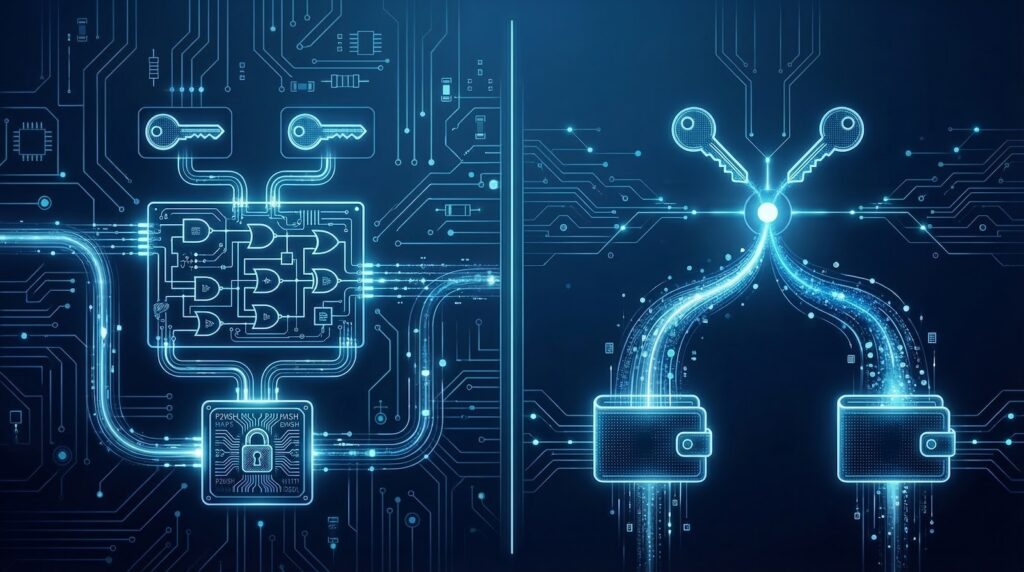
The funding transaction (channel open) is a standard Bitcoin transaction with a P2WSH 2-of-2 multisig output. It records: the wallet that funded the channel (the funder’s address and input UTXOs), the channel capacity in satoshis, the two participant public keys embedded in the 2-of-2 multisig script, and the block timestamp marking when the channel became active.
The closing transaction (channel close) spends the 2-of-2 multisig output. A cooperative close produces two outputs, one for each participant, revealing their final balance split and receiving wallet addresses. A force close uses a commitment transaction with time-locked outputs and may produce additional penalty data if a revoked state was broadcast.
These two transactions are the floor of Lightning forensic evidence, present for every channel regardless of how many payments were routed through it.
How to Identify Lightning Channels on the Bitcoin Blockchain
Lightning funding transactions are identifiable by their P2WSH output structure and the specific 2-of-2 multisig template required by the BOLT channel specification. Investigators use three approaches to identify channels:
Script pattern matching. Blockchain analysis tools filter for P2WSH outputs with the 2-of-2 multisig witness script structure. This produces candidate channel outputs that can be cross-referenced against known Lightning network data.
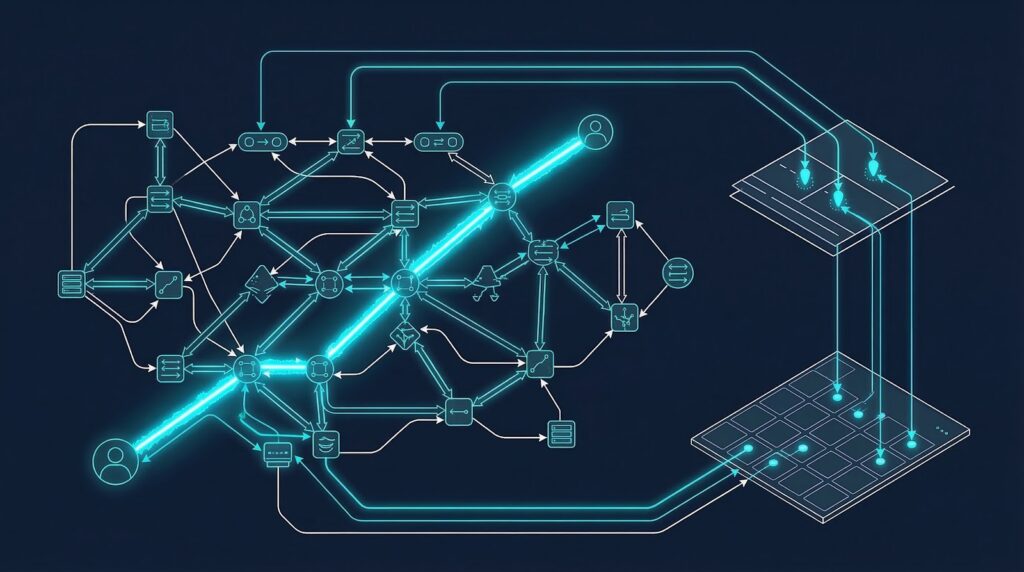
Gossip protocol cross-reference. The Lightning Network gossip protocol publicly broadcasts channel announcements from participating nodes. Each announcement includes the funding transaction outpoint (txid:vout), the channel capacity, and the node public keys. Investigators can download a snapshot of the Lightning Network graph and match gossip-layer channel IDs to on-chain funding transactions.
Known counterparty search. If one participant’s Lightning node public key is known (from subpoenaed records, network graph data, or a Lightning invoice), investigators can identify all channels that node announced or participated in and retrieve the corresponding funding transactions.
Cooperative vs. Force Close: Forensic Implications
The method by which a Lightning channel closes significantly affects the forensic data available on-chain.
| Factor | Cooperative Close | Force Close | Penalty (Justice) Close |
|---|---|---|---|
| Trigger | Both parties agree | One party offline or unresponsive | One party broadcasts revoked state |
| On-chain structure | Single 2-output transaction | Commitment transaction + CSV-locked outputs | Justice transaction claiming all funds |
| Balance visibility | Both outputs revealed immediately | Outputs time-locked; delayed revelation | All funds swept to honest party’s address |
| Forensic richness | High: both final balances visible | Medium: delayed outputs reveal eventual balances | High: reveals attempted channel fraud |
| Misconduct indicator | None | Possible coordination failure | Evidence of deliberate revoked-state broadcast |
| Tool complexity | Low | Medium | High (requires revocation key identification) |
| Court relevance | Participation and balance | Timing and balance | Channel fraud evidence |
Penalty transactions are particularly significant for legal proceedings because they provide on-chain evidence of deliberate fraud. Investigating wallets involved in penalty events requires matching the justice transaction to the prior commitment transaction broadcast by the bad actor.
In-Flight HTLC Forensics During Force Closes
Lightning payments in transit use HTLC outputs at each channel hop. Under normal conditions, these HTLCs are resolved off-chain when the payment succeeds or fails. When a channel is force-closed while an HTLC is in-flight, the HTLC output becomes a time-locked on-chain output.
This creates a forensic opportunity. The in-flight HTLC output contains:
- The payment hash, which is the same hash used at every hop in the payment route
- The HTLC amount, revealing a lower bound on the payment size
- The timelock expiry block height
If the HTLC is resolved after force close (the preimage is revealed to claim the output), the preimage also becomes on-chain. Investigators can use the revealed preimage to locate the same payment hash at other channel hops that were closed around the same time, enabling partial route reconstruction across disconnected channels.
This technique is most effective when investigating a cluster of channels that were closed in a short window, as occurs during liquidity rebalancing events or deliberate channel pruning by a wallet under investigation.
Lightning Node Records as a Forensic Data Source
On-chain data alone captures only the channel anchors. The payment-level detail that investigators often need resides in the Lightning node software’s internal database.
Lightning node implementations (LND, CLN, Eclair) maintain local databases containing: the full history of HTLC forwards and resolutions, peer connection logs with IP addresses and timestamps, channel state machine logs, and payment attempt records. For nodes operated by identifiable entities, including businesses, exchanges, and Lightning Service Providers (LSPs), this data is subpoenable.
LSPs in particular hold rich forensic data. An LSP that provides channel liquidity to custodial users maintains: account-to-channel mappings, payment invoices and their resolution status, and user KYC records where required by AML policy. Investigators pursuing Lightning-involved cases should identify whether the target wallet used an LSP-hosted channel and serve legal process accordingly.
Producing Legal-Standard Lightning Network Forensic Reports
A court-ready Lightning Network forensic report must distinguish clearly between what the on-chain record establishes and what is inferred from network-layer or subpoenaed data. The two evidence tiers carry different evidentiary weights.
Tier 1 – On-chain evidence (strongest). Funding transaction ID, block height, timestamp, funder address, channel capacity, participant public keys, closing transaction ID, and final balance outputs. These are immutable Bitcoin blockchain records.
Tier 2 – Gossip layer evidence (strong). Channel announcement data from the Lightning Network graph, including node aliases, IP addresses, and channel routing policies. Publicly broadcast but mutable over time; investigators should capture a timestamped snapshot.
Tier 3 – Node log evidence (dependent on disclosure). Payment forwarding records, HTLC resolution logs, and peer connection data from node operator disclosures or subpoenaed records. Strength depends on the completeness and integrity of the operator’s logging practices.
The report must document the source of each evidence item, the tools and queries used, and the logical steps connecting on-chain data to forensic conclusions.
Frequently Asked Questions
What on-chain data is available for Lightning Network forensics?
Every Lightning channel creates two on-chain Bitcoin transactions: the funding transaction (channel open) and the closing transaction (channel close). Both are permanently recorded on the base layer and contain the two participant public keys, the channel capacity in satoshis, the multisig output structure, and the timestamps. Individual payments routed through the channel are off-chain and not directly visible on Bitcoin’s blockchain.
Can Lightning Network payments be traced?
Individual off-chain payments within a Lightning channel are not broadcast to the Bitcoin blockchain and are therefore not directly traceable through standard blockchain analysis. However, investigators can reconstruct participation evidence, channel capacity, opening and closing timing, and the final balance distribution from on-chain channel anchor transactions. Cooperative closes also reveal final balance splits.
What is a Lightning channel funding transaction?
A funding transaction is the on-chain Bitcoin transaction that opens a Lightning channel. It creates a 2-of-2 multisig output controlled by both channel participants. The funding transaction identifies the funder’s wallet, the channel capacity, the multisig pubkeys of both parties, and the block timestamp. It is the primary on-chain forensic entry point for Lightning channel analysis.
What does a Lightning channel closing transaction reveal forensically?
Cooperative channel closes produce a single transaction distributing the multisig balance between two output addresses. This reveals the final balance split between participants, both receiving wallet addresses, and the channel’s operational duration. Force-close transactions use different scripts (commitment transactions) and may reveal penalty transaction data if one party attempted to broadcast a revoked state.
How do investigators identify Lightning channels on the Bitcoin blockchain?
Lightning funding transactions are identifiable by their P2WSH 2-of-2 multisig output structure. Investigators search for outputs matching the known Lightning channel script template, or cross-reference known channel IDs from the Lightning Network gossip protocol. The BOLT specification standardizes channel announcement messages, which include the funding transaction outpoint and are propagated publicly across the Lightning Network.
What is a Lightning Network penalty transaction and why does it matter forensically?
A penalty transaction occurs when one channel participant attempts to close with an outdated commitment state. The honest party can broadcast a justice transaction claiming all channel funds using the revocation key. Penalty transactions are on-chain events that identify bad actors attempting to commit channel fraud. From a forensic standpoint, they provide evidence of deliberate misconduct and expose the relevant wallet addresses.
Can Lightning Network node data be subpoenaed?
Lightning node operators retain logs of channel activity, payment forwarding records, and peer connection metadata. Routing nodes in particular may have significant transactional data about payments passing through their channels. If the operator of a routing node is identifiable, a legal subpoena can compel disclosure of this data. Custodial Lightning service providers (Lightning Service Providers, or LSPs) typically maintain even more complete records.
How does Lightning HTLC forensics work for in-flight payments?
Payments in transit through Lightning channels use Hash Time-Locked Contracts (HTLCs) at each hop. If a channel is force-closed while an HTLC payment is in-flight, the HTLC output becomes visible on-chain. Investigators can extract the hash preimage from resolved HTLC outputs, linking payment hashes across multiple channel hops to reconstruct partial payment paths even without full routing visibility.
What are the limits of Lightning Network forensics?
The primary limitation is that off-chain payments within open channels are not on-chain and leave no direct Bitcoin blockchain record. Routing path privacy is also protected by onion encryption (SPHINX), so individual payment senders cannot determine the complete route. Forensic analysis is therefore bounded to channel-level evidence: who opened channels with whom, for how much, and when they closed.
How is Lightning Network forensic evidence used in legal proceedings?
On-chain channel data (funding and closing transactions) is used to establish participation, capacity, and timing. Subpoenaed Lightning node logs provide payment forwarding records. Combined, this evidence can demonstrate that a specific wallet participated in a Lightning channel with a known counterparty, transacted during a specific time window, and received specific final balances. Expert witness reports contextualizing this data are required for court admissibility.
Executive Summary
Lightning Network forensics derives investigative value from two on-chain anchor transactions present for every channel, combined with gossip-layer network data and subpoenable node operator records. The funding transaction establishes participants, capacity, and open timestamp; the closing transaction reveals final balance splits and receiving addresses. Force closes and penalty transactions extend the on-chain evidence surface, while in-flight HTLC outputs during force closes enable partial payment path reconstruction. Individual routed payments are off-chain and not directly visible, but the channel record combined with LSP and node log subpoenas produces a legally defensible evidence package suitable for court proceedings.
What Should You Do Next?
If your investigation involves Bitcoin transactions routed through the Lightning Network, the forensic methodology outlined here provides a structured starting point for extracting the available evidence. For cases requiring expert channel analysis, legal-standard documentation, or court-ready expert witness reporting, Crypto Trace Labs offers specialist blockchain forensics services covering both on-chain and off-chain Lightning Network evidence. Contact our team with the channel details or wallet addresses relevant to your case.
People Also Read
- How Does Blockchain Forensics Work? Expert Methods Explained
- Cross-Chain Forensics: Tracking Assets Through Blockchain Bridges
- On-Chain Heuristics: How Pattern Recognition Identifies Wallet Owners
- What Can Transaction Timestamps Reveal in Crypto Investigations?
About the Author
Crypto Trace Labs is a specialist crypto asset recovery and blockchain forensics firm founded by VP and Director-level executives formerly of Blockchain.com, Kraken, and Coinbase. Our team holds ACAMS accreditations, MLRO qualifications across the UK, US, and EU, and Chartered Fellow Grade status at the CMI. With over 10 years of experience in financial crime investigation and court-recognized blockchain forensics expertise, we have recovered 101 Bitcoin for clients in the last 12 months and delivered record fraud reduction for a $14bn crypto exchange. We work with law enforcement agencies, regulated financial institutions, and private clients on crypto asset recovery, blockchain forensics, AML compliance, and expert witness testimony – globally. We offer no upfront charge for non-custodial wallet recoveries. Contact us
Disclaimer: This article is for informational and educational purposes only. Nothing in this article constitutes legal advice. Always consult a qualified legal professional for advice specific to your situation. Crypto Trace Labs does not guarantee specific investigation outcomes.