


Last updated: March 2026
NFT on-chain forensics is the application of blockchain investigation techniques to non-fungible token transactions, specifically to identify theft, wash trading, money laundering, and marketplace manipulation. NFT forensics differs from standard cryptocurrency tracing because the asset type carries metadata, marketplace history, and smart contract event logs that provide additional evidentiary dimensions beyond simple wallet-to-wallet transfers. According to Chainalysis (2024), NFT-related fraud and theft accounted for approximately USD 24 million in recorded losses in 2023, with wash trading volume estimated at over USD 2 billion.
Crypto Trace Labs has conducted NFT forensic investigations for private clients and law enforcement agencies, covering marketplace fraud, stolen NFT recovery, and wash trading pattern analysis. This guide explains the core technical methods used in NFT on-chain investigation.
Key Takeaways
- NFT theft typically occurs through phishing, smart contract approval exploits, or marketplace vulnerability abuse, and leaves a deterministic on-chain trail in ERC-721 and ERC-1155 transfer logs
- Wash trading involves a single entity buying and selling the same NFT across multiple wallets to artificially inflate perceived value, detectable through common funding source analysis
- Smart contract event logs provide timestamped records of every NFT transfer, approval, and sale event that are immutable and admissible as forensic evidence
- Marketplace data from OpenSea, Blur, and LooksRare provides off-chain context including user accounts, IP addresses, and payment records accessible via legal information request
- NFT money laundering uses rapid asset appreciation to justify layering, detectable through on-chain risk scoring applied to transaction counterparty histories
Why This Matters
NFT-related financial crime has moved from a niche concern to a mainstream enforcement priority. The FCA (2024) has signalled that certain NFT-related activities may fall under existing financial promotion and investment regulations. Interpol has designated NFT fraud as a growing vector for money laundering at scale, particularly given the speed at which NFT values can be manipulated and assets transferred cross-border. Investigators and prosecutors who do not understand smart contract event log analysis, marketplace data structures, and NFT wallet clustering techniques cannot effectively build or challenge forensic evidence in NFT-related proceedings.
How NFT Theft Occurs On-Chain
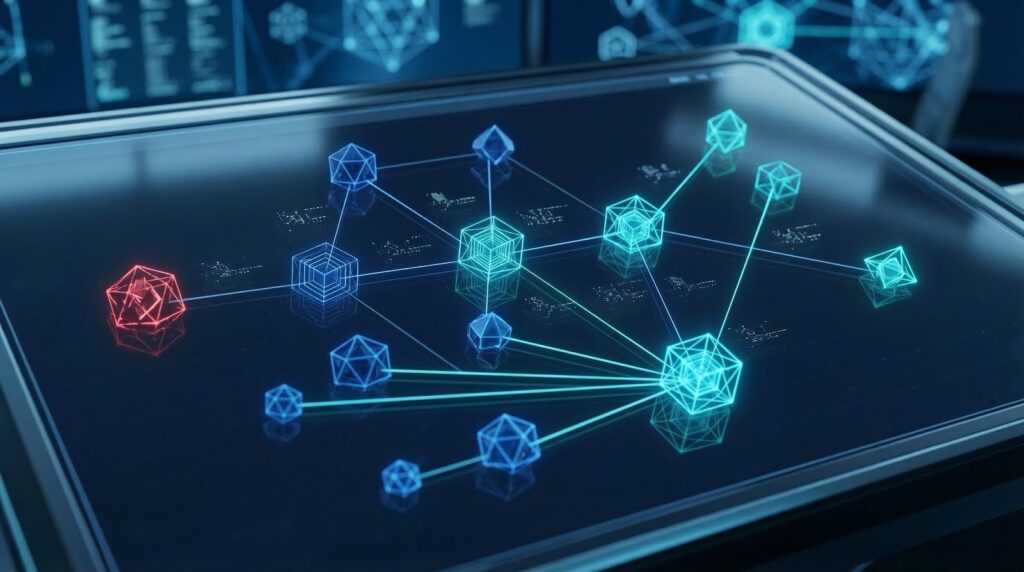
NFT theft occurs through several distinct attack vectors, each leaving a characteristic on-chain signature. Phishing attacks trick owners into signing malicious transactions that grant setApprovalForAll permissions, allowing the attacker to transfer the victim’s entire NFT collection in a single transaction. Smart contract approval exploits abuse legitimate marketplace approval mechanisms to drain wallets without direct user interaction. Marketplace vulnerability attacks – such as the OpenSea order book exploit in 2022 – use stale listings to purchase NFTs at historical floor prices. Each attack type produces a specific pattern of ERC-721 Transfer events in the smart contract log that forensic investigators can read directly from the blockchain.
Smart Contract Event Log Analysis
Smart contract event logs are the primary forensic data source in NFT investigations. Every ERC-721 and ERC-1155 token transfer emits a Transfer event containing the from address, to address, token ID, and block timestamp. Every marketplace sale emits an OrderFulfilled or equivalent event. Every approval grant emits an Approval or ApprovalForAll event. These events are immutable once confirmed on the blockchain, cannot be altered by any party including the marketplace operator, and are directly readable from the Ethereum blockchain without requiring any third-party data source.
For forensic documentation, investigators should record the transaction hash, block number, timestamp, and all event parameters for every relevant log entry. This creates an immutable chain of custody record that satisfies the on-chain evidence collection standards required for court admissibility.
Wash Trading Detection Methods
Wash trading in NFT markets involves a single entity buying and selling the same NFT across multiple wallets it controls to create artificial price history. On-chain detection methods include: common funding source analysis (tracing all wallets involved in a trade back to a common funding wallet), timing correlation (sales occurring within minutes or hours of initial purchase suggest automated or coordinated trading), and price anomaly detection (NFTs selling for multiples of floor price to self-controlled wallets). According to Elliptic (2024), approximately 58% of NFT wash trading volume is detectable using common funding source analysis alone, with the remainder requiring more sophisticated graph analysis.
| Wash Trading Signal | Detection Method | Confidence Level |
|---|---|---|
| Common funding wallet | Address clustering | High |
| Rapid buy-sell cycles | Timing analysis | High |
| Price well above floor | Value anomaly detection | Medium |
| Same buyer and seller | Direct address match | Definitive |
| Circular fund flows | Graph path analysis | High |
| Low gas fees (self-trade) | Fee pattern analysis | Medium |
Marketplace Data and Legal Information Requests
NFT marketplace data provides critical off-chain corroboration for on-chain forensic findings. OpenSea, Blur, Coinbase NFT, and LooksRare maintain user account records, IP address logs, payment method history, and in some cases verified identity data from KYC processes. This data is accessible via legal information request – court order, production order, or MLAT for cross-border cases. Combining on-chain transaction evidence with marketplace user account data provides the identity attribution layer that blockchain analysis alone cannot supply. Investigators should serve information requests on all marketplaces where stolen NFTs appeared for sale, not only the originating platform.
Tracing Stolen NFTs Across Marketplaces
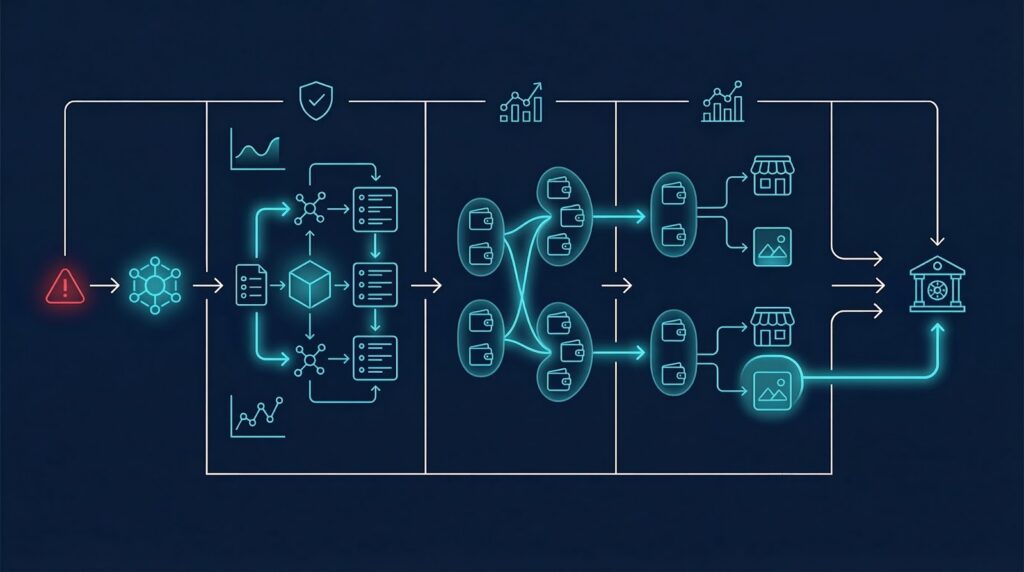
Stolen NFTs are typically listed for rapid sale on secondary marketplaces within minutes to hours of theft, often at below-floor prices to ensure quick conversion. The on-chain trace follows the NFT token ID through ERC-721 Transfer events across each marketplace and wallet hop. Key investigative checkpoints include: the initial theft transaction and attacker wallet, subsequent transfer events to intermediary wallets, marketplace listing and sale events, ETH proceeds routing to exchanges, and conversion to stablecoins or other assets. Cross-chain forensics may be required if ETH proceeds are bridged to other networks before withdrawal.
Frequently Asked Questions
How are stolen NFTs traced on-chain?
Stolen NFTs are traced through ERC-721 Transfer event logs in the smart contract, which record every movement of the token between addresses with a timestamped, immutable record. Investigators follow the token ID through each transfer event, identifying the theft transaction, subsequent wallet hops, marketplace listings, and eventual sale. On-chain clustering techniques link wallets controlled by the same entity. Marketplace data from OpenSea and similar platforms, obtained via legal information request, provides the off-chain identity attribution to connect blockchain addresses to real-world identities.
What is wash trading in NFT markets?
Wash trading in NFT markets involves a single entity or coordinated group buying and selling the same NFT across wallets they control to create artificial price history and inflate perceived value. Common indicators include wallets sharing funding sources, rapid buy-sell cycles within hours of purchase, and prices significantly above market floor. Wash trading can constitute market manipulation and fraud under existing financial crime regulations in most jurisdictions. On-chain detection using common funding source analysis identifies the majority of wash trading patterns without requiring off-chain data.
Are NFT transactions admissible as evidence in court?
Yes. Smart contract event log data is immutable and readable directly from public blockchain records, making it inherently non-repudiable as evidence. UK courts have accepted blockchain transaction records as documentary evidence in civil and criminal proceedings. The evidentiary challenge lies not in the authenticity of the data but in the interpretation and attribution of wallet addresses to identities. Forensic reports presenting NFT transaction evidence should document the methodology for reading smart contract logs, the tools used, and the basis for any identity attribution claims.
What is setApprovalForAll and why does it matter in NFT theft?
SetApprovalForAll is an ERC-721 and ERC-1155 smart contract function that grants a specified operator address unlimited permission to transfer all NFTs in a wallet on the owner’s behalf. NFT theft frequently exploits this mechanism – attackers trick users into signing transactions that grant setApprovalForAll to an attacker-controlled address, which then drains the entire NFT collection in a single subsequent transaction. The grant transaction itself is recorded on-chain as an Approval event, providing a clear forensic record of when approval was granted and to which address.
Can OpenSea provide user data to law enforcement?
Yes. OpenSea and other major NFT marketplaces maintain user account records, IP address logs, email addresses, payment method history, and in some cases KYC data from verification processes. This data is accessible to law enforcement via court orders, subpoenas (US), production orders (UK), or MLAT requests for cross-border cases. Response times vary by jurisdiction and marketplace. US-based platforms typically respond to US legal process within days to weeks. For UK law enforcement, international letters of request may be required for US-based marketplaces that do not maintain UK operations.
What forensic tools are used for NFT investigation?
NFT forensic investigations use blockchain analytics platforms including Chainalysis Reactor and Elliptic Forensics for wallet clustering and entity attribution. Direct blockchain data sources including Etherscan, The Graph, and raw Ethereum node queries are used to extract smart contract event logs. Marketplace APIs and legal information requests provide off-chain user account data. Graph visualisation tools are used to map NFT transfer chains. For sophisticated cases involving DeFi conversion of NFT sale proceeds, DeFi-capable platforms including Elliptic and TRM Labs provide the required protocol coverage.
How do investigators detect NFT money laundering?
NFT money laundering detection focuses on rapid value appreciation patterns, common funding source analysis between buyer and seller wallets, and unusual transaction counterparty risk profiles. A wallet with criminal history funding a buyer that purchases NFTs at inflated prices from a seller with no prior transaction history is a characteristic money laundering pattern. Risk scoring tools from Chainalysis and Elliptic assign risk scores to wallet counterparties, flagging when illicit-source funds are used to purchase NFTs. The proceeds from inflated NFT sales can then appear as clean cryptocurrency income on the receiving wallet.
What is the difference between ERC-721 and ERC-1155 NFTs?
ERC-721 is the original NFT standard, with each token ID representing a unique, non-interchangeable asset. ERC-1155 is a multi-token standard that supports both fungible and non-fungible tokens within the same smart contract, allowing batch transfers of multiple token types. From a forensic perspective, ERC-1155 batch transfers can move multiple NFTs in a single transaction, making visual inspection of blockchain explorers less reliable than systematic event log analysis. Both standards emit Transfer events that are equally readable and equally admissible as forensic evidence.
Can NFTs be recovered after theft?
NFT recovery after theft depends on the speed of response and whether the stolen asset can be frozen or intercepted before sale. Some marketplaces including OpenSea maintain blocklists that prevent stolen NFTs from being listed or sold, accessible via a theft reporting process. On-chain, NFTs cannot be reversed or frozen without action from the smart contract owner – most NFT smart contracts do not include admin freeze functions. Recovery is most likely through civil injunction proceedings requiring exchanges to freeze proceeds, or through negotiated return with the attacker when identity is attributed. Rapid forensic analysis in the first 24-48 hours provides the best recovery chances.
What data should be collected immediately after NFT theft?
Immediately after NFT theft, investigators should record the victim’s wallet address and all NFT token IDs affected, the transaction hash of the theft transaction, the attacker’s wallet address, the block number and timestamp, and any marketplace listing data visible before the stolen NFT is sold. Screenshots of marketplace listings should be taken with timestamp evidence. The approval transaction that preceded the theft should be identified and documented. This initial data set enables rapid on-chain tracing and increases the likelihood of intercepting sale proceeds before they reach an exchange and are converted.
Executive Summary
NFT on-chain forensics applies blockchain investigation techniques to non-fungible token theft, wash trading, money laundering, and marketplace manipulation. Smart contract Transfer and Approval event logs provide immutable, court-admissible records of every NFT movement. Wash trading detection uses common funding source analysis and timing correlation across buyer and seller wallets. Marketplace data from OpenSea and similar platforms, obtained via legal information request, provides the identity attribution layer that blockchain analysis alone cannot supply. NFT theft investigations are most productive when forensic analysis begins within 24-48 hours of the incident, before stolen assets are converted and proceeds dispersed.
What Should You Do Next?
NFT forensic investigations require specific expertise in ERC-721 and ERC-1155 smart contract event log analysis, marketplace data structures, and the legal instruments available to freeze stolen assets and compel identity disclosure. Standard blockchain forensic training rarely covers these NFT-specific techniques in depth.
Crypto Trace Labs has conducted NFT forensic investigations covering marketplace fraud, stolen collection recovery, and wash trading analysis for both law enforcement and private clients. Our ACAMS-accredited team produces court-ready forensic reports documenting smart contract evidence with full methodology. Contact Crypto Trace Labs to discuss your NFT investigation requirements.
People Also Read
- How Does Blockchain Forensics Work? Expert Methods Explained
- How Do Investigators Use Address Clustering to Link Crypto Wallets?
- On-Chain Risk Scoring: How Investigators Rate Transaction Suspiciousness
- Comparing On-Chain Analysis Platforms: Technical Feature Analysis
About the Author
Crypto Trace Labs is a specialist crypto asset recovery and blockchain forensics firm founded by VP and Director-level executives formerly of Blockchain.com, Kraken, and Coinbase. Our team holds ACAMS accreditations, MLRO qualifications across the UK, US, and EU, and Chartered Fellow Grade status at the CMI. With over 10 years of experience in financial crime investigation and court-recognized blockchain forensics expertise, we have recovered 101 Bitcoin for clients in the last 12 months and delivered record fraud reduction for a $14bn crypto exchange. We work with law enforcement agencies, regulated financial institutions, and private clients on crypto asset recovery, blockchain forensics, AML compliance, and expert witness testimony – globally. We offer no upfront charge for non-custodial wallet recoveries. Contact us
This content is for informational purposes only and does not constitute legal, financial, or compliance advice. Crypto asset recovery outcomes depend on specific circumstances, regulatory cooperation, and technical factors. Consult qualified professionals regarding your specific situation.